

Four faculty members and researchers from the University of Debrecen’s Faculty of Engineering and Faculty of Informatics recently completed a study tour in Italy’s famous Motor Valley. The primary objective of their visit was to conduct an in-depth, engineering-focused study of the unique design, materials science, aerodynamics, and powertrain technology solutions in premium motorcycles, super-sports cars and Formula 1 race cars.
News
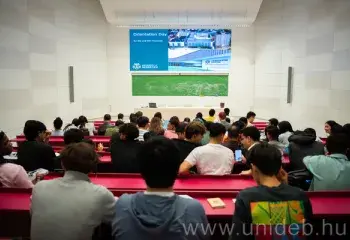
The Orientation Day held at the Faculty of Engineering of the University of Debrecen focused on introducing the mandatory academic administrative procedures for first-year international students. The presentations delivered in English on this day covered topics like the infrastructure of the faculty, the way to register for courses in the Neptun system, and the introduction of an overview of the web-based systems at our university.
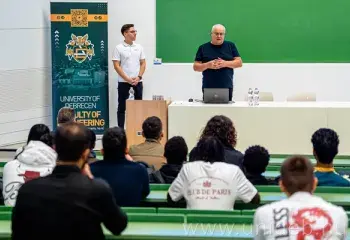
An elective course covering the operation of batteries and the fundamentals of their manufacturing technology is launched jointly by the Faculty of Engineering at the University of Debrecen and EVE Power Hungary Kft. Students from all faculties of the university can sign up for this one-semester program until September 20.
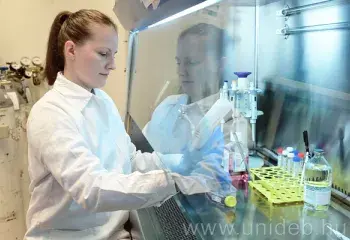
A bile acid naturally present in the body (ursodeoxycholic acid) may contribute to the growth, spread, and metastasis of ovarian tumors, according to a study by researchers at the University of Debrecen. This finding is significant because previous studies on this substance had only demonstrated anticancer effects. The research highlights that substances produced by gut bacteria can affect different types of tumors in varying ways. The researchers have received the Publication Award from the University of Debrecen and the Count István Tisza Foundation for the University of Debrecen for their paper presenting these findings.
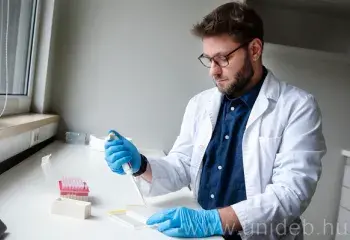
A form of vitamin D significantly reduced a dangerous inflammatory reaction associated with leukemia in laboratory studies, according to research by scientists at the University of Debrecen. This finding could lead to the development of new adjunctive treatments in the long term, but for now, vitamin D is not a substitute for life-saving steroid therapy. The researchers reported their findings in a prestigious international medical-biological journal, and their article has now been recognized with the Publication Award from the University of Debrecen and the Count István Tisza Foundation for the University of Debrecen.

More than 12,000 freshers are beginning their studies at the University of Debrecen as of this September. At the ceremonial senate meeting of the university on Sunday for marking the start of the new academic year, Minister for Education and Children’s Affairs Judit Lannert underlined that the future of Hungary is inseparable from the University of Debrecen, which serves as a model for other institutions of higher education in our country in so many respects. This year’s ceremony was also about honoring outstanding contributions to the reputation of our university. It was for the first time that titles of rector emeritus and decanus emeritus were conferred upon former leaders who have played a decisive part in the history of the institution.
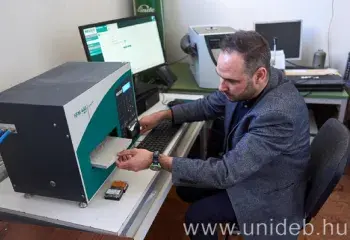
The general properties and the resistance of so-called aerogel materials, which are increasingly used in the construction, automotive, aerospace and oil industries, have been tested at the Faculty of Engineering of the University of Debrecen. The consequent findings of our researchers may contribute to further growth in the application of aerogels.
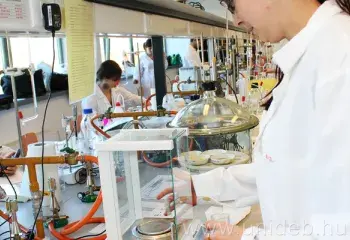
Researchers at the Faculty of Engineering of the University of Debrecen have investigated a physico-chemical treatment method for so-called bathroom greywater (BGW). This is water that has already been used once in the bathroom (gently) but can be reused for certain non-potable purposes after treatment. The findings were published in the journal Results in Engineering. This article has also been honored with a Count István Tisza Foundation for the University of Debrecen and the University of Debrecen Publication Award.
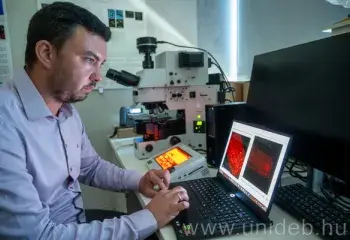
Even low concentration levels of toxins in apparently clean surface waters can be fatal to the plant kingdom, reveals one of the latest studies from the Department of Botany at the Faculty of Science and Technology (TTK) of the University of Debrecen. The study, published in the journal Environmental Pollution, presents at the cellular and molecular levels how toxic substances and herbicides in our environment damage the inner defense mechanisms of plant cells. These internationally significant findings have been recognized with the Count István Tisza Foundation for the University of Debrecen Publication Award.

The city of Debrecen, together with the University of Debrecen, share an opportunity to emerge as one of the most important new centers of European electromobility and battery manufacturing. This assumption is also supported by a meeting on Thursday, during the course of which the management of our university received a high-ranking Chinese delegation in the Rector’s Council Chamber of the Main Building. The primary focus of the discussion at the meeting was the university’s official accession to the global professional association of its Far Eastern partners.